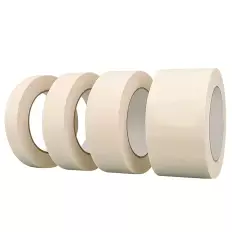
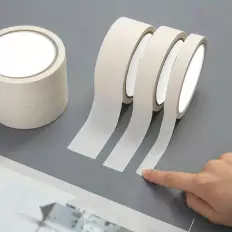
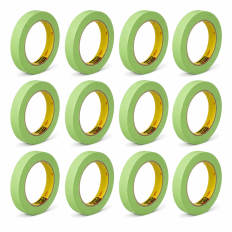
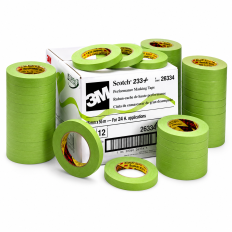
Adhesive masking and painting tapes for bodywork, construction, industry and precise finishing: paper, UV-resistant options, Fine Line, vinyl and silicone-coated polyester for high-temperature cycles.
Professional masking tapes: which one should you choose?
This category brings together tapes with different backings and adhesive systems. Choose according to the substrate, the required precision, application time, outdoor exposure and the temperature of the painting process.
Paper tapes for painting, construction and bodywork
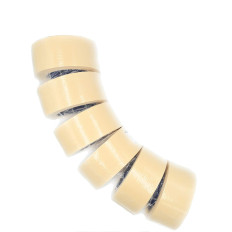
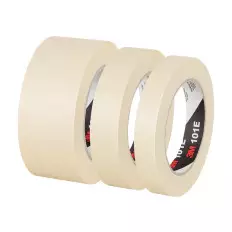
Paper tapes cover general jobs, construction and bodyshop work. The range includes 60–80 °C tapes for common applications, extra-resistant industrial grades up to around 100 °C and professional products for cleaner edges. The 80 °C bodywork paper masking tape is intended for automotive work, while 3M Scotch 233+ is the professional paper option for masking and painting. 3M 101E and the other paper tapes complete the range for less demanding substrates and cycles.
Temperature figures are indicative and cannot be transferred between models. For 3M Scotch 233+, approximately 120 °C for 30 minutes is documented; for other products, follow the relevant technical sheet and respect the time, substrate and paint system.
UV tapes for outdoor use
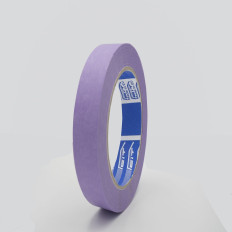
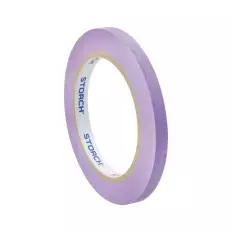
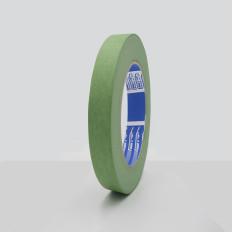
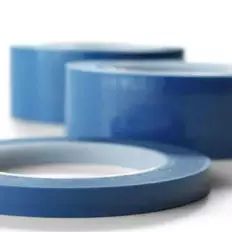
Outdoor work can call for paper masking tapes with UV resistance, available in violet, blue and green versions. The violet UV-resistant outdoor tape belongs to the same family as the blue and green UV models. Exposure time, temperature and substrate compatibility depend on the individual product: UV resistance does not mean unlimited outdoor durability or suitability for every weather condition.
Fine Line and vinyl tapes for curves and sharp edges
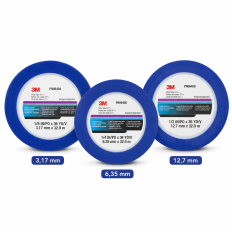
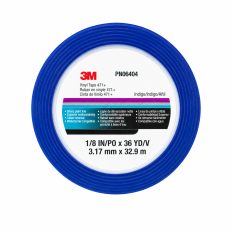
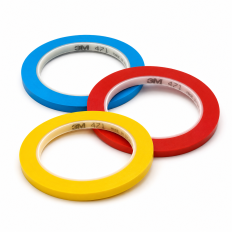
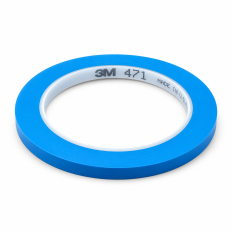
Fine Line and vinyl tapes are useful when you need curves, narrow profiles and clean colour separations. 3M 471+ Fine Line must be distinguished from 3M 471: the first is designed for more demanding professional masking, while the second is a coloured vinyl tape for marking, masking and decoration. RI-MASK tapes complete the selection with different formats for painting.
Do not transfer one model’s performance automatically to another: 3M 471+ has a stated oven cycle of about 121 °C for 30 minutes, whereas 3M 471 and RI-MASK must be used according to their own instructions.
Silicone-coated polyester tapes for high temperatures
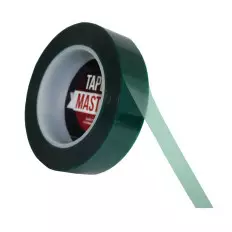
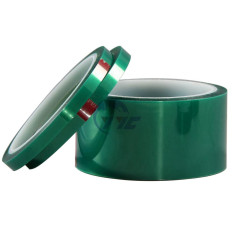
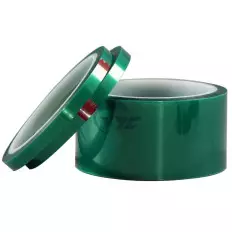
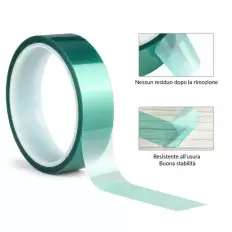
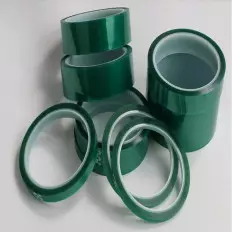
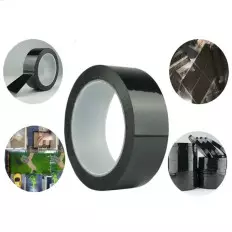
Polyester tapes with silicone adhesive are intended for processes that require stability and controlled removal at high temperature, such as powder coating, thermal treatments or galvanic processes when specified by the product sheet. The silicone-coated polyester high-temperature tape and the black, green and other-format models belong to this family.
The range covers indicative values from 200 to 220 °C, but the limit depends on the product, substrate, time and process. Always check the technical sheet before using a tape in an oven or on a difficult surface.
Comparison table
| Family |
Backing |
Indicative temperature |
Outdoor / UV use |
Curves / precision |
Recommended application |
Available products |
| General-purpose / construction paper |
Paper |
60–80 °C depending on model |
Not documented unless the version is specific |
Standard edges |
Painting, walls and construction |
60–80 °C paper tapes and 3M 101E |
| Bodywork / professional paper |
Paper |
Up to about 100 °C; 233+ about 120 °C for 30 min |
Not documented |
Clean edges and good conformability |
Bodywork and painting |
80 °C bodywork tape, extra industrial paper, 3M Scotch 233+ |
| Outdoor UV paper |
Paper |
Depending on model |
UV resistance depends on product |
Compatible profiles and edges |
Outdoor masking |
Violet, blue and green UV models |
| Fine Line / vinyl |
Vinyl |
471+ about 121 °C for 30 min; 471 according to its sheet |
Not documented |
Curves and precise lines |
Finishing, marking and colour separation |
3M 471+ and 3M 471 |
| RI-MASK |
Backing and adhesive depend on model |
No general figure documented |
Not documented |
Masking formats |
Painting according to the product sheet |
RI-MASK in different formats |
| High-temperature silicone-coated polyester |
Polyester with silicone |
About 200–220 °C depending on model |
Not documented |
Depends on substrate and format |
Powder coating, thermal cycles and technical applications |
Blue, black and green silicone-coated polyester models |
Application tips
- Clean and dry the surface; dust, grease and moisture can reduce adhesion.
- On delicate surfaces, fresh coatings or sensitive materials, test first in an inconspicuous area.
- Apply the tape with even pressure, especially along edges, profiles and curves.
- Respect the temperature and time specified for the selected model; do not use one tape’s maximum value as the category-wide reference.
- Remove the tape according to the product and painting-process instructions, checking the result first on a small area.
Frequently asked questions
Which tape should I choose for bodywork?
For bodywork, consider a professional paper tape such as the 80 °C bodywork model or 3M Scotch 233+, based on the paint, temperature and finish required.
Can I use these tapes on walls and window frames?
Some paper models are intended for painting and construction, but the substrate, coating condition and dwell time must be compatible. Always test first.
When is paper better than Fine Line?
Paper is suitable for general masking; Fine Line and vinyl are preferable for curves, narrow profiles and precise colour separation.
Which tape works for curves?
Fine Line and vinyl tapes generally follow curves and narrow edges more closely. Choose the width and adhesion for the radius and substrate.
Which tape should I use for high temperature?
For thermal cycles, consider silicone-coated polyester or the specific model indicated for the process. Temperature and time must be checked in the technical sheet.
Are UV tapes suitable for every outdoor job?
No. UV resistance and exposure duration vary by product; check the sheet and the actual installation conditions.
What is the difference between 3M 471 and 3M 471+?
They are distinct models. 471+ is the Fine Line version for more demanding masking and has specific oven guidance; do not automatically assign the same values to 471.
How should I remove the tape after painting?
Remove it following the product and process instructions, taking account of the surface and coating. A preliminary test helps reduce the risk of damage.
Will the tape leave residue?
Removal and possible residue depend on the surface, dwell time, temperature, coating and model. There is no universal zero-residue guarantee.
For more technical requirements, consult Industrial Tapes & Fabrics or contact support through Company Supplies.