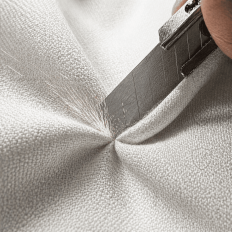
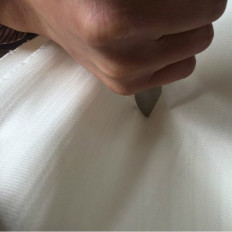
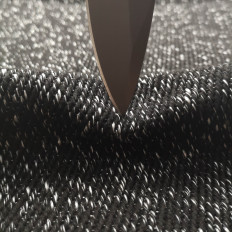
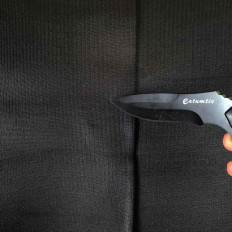
Cut-resistant technical fabrics: materials and specifications
This category brings together technical fabrics intended for reinforcement, fabrication and applications where cutting, tearing, abrasion or processing performance depends on the material, construction and fabric weight. The range includes aramid fabric, Kevlar, UHMWPE and HPPE. Each article has its own characteristics: for performance, limitations and any regulatory statements, refer to the documentation for the specific product.
Kevlar, UHMWPE and HPPE: which material should you choose?
The choice depends not only on the fibre name, but also on weave, fabric weight, thickness, format and intended use. Kevlar is listed with aramid fibre for product 430; UHMWPE and HPPE are ultra-high-molecular-weight polyethylene materials. Products from the same family may behave differently when construction, weight or processing changes.
| Product |
Material |
Format |
Thickness |
Fabric weight |
Technical data and documentation |
| Aramid / Kevlar fabric 430 |
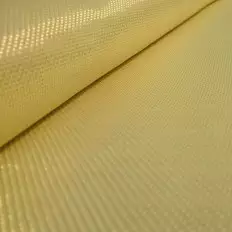
Aramid fibre / Kevlar |
100 × 100 cm |
0,3 mm |
240 g/m² |
Check the product sheet for technical characteristics and any available regulatory statements. |
| UHMWPE fabric 646 |
UHMWPE |
100 × 100 cm or 185 × 100 cm |
1 mm |
430 g/m² |
Check the product sheet for technical characteristics and any available regulatory statements. |
| HPPE fabric 952 |
HPPE |
110 × 100 cm |
2 mm |
650 g/m² |
Check the product sheet for technical characteristics and any available regulatory statements. |
| UHMWPE + polyester fabric 1191 |
UHMWPE + polyester |
150 × 50 cm |
1,82 mm |
850 g/m² |
Check the product sheet for technical characteristics and any available regulatory statements. |
Aramid, para-aramid, UHMWPE and HPPE
Aramid refers to a family of aromatic fibres, while para-aramid identifies a specific subgroup. The name Kevlar is used for product 430 together with aramid fibre; composition and origin should be checked against the available documentation. UHMWPE and HPPE belong to the ultra-high-molecular-weight polyethylene family. To compare fabrics, read the construction, fabric weight, thickness and format as well as the material name.
Cutting, puncture and tearing are different properties
Cut resistance concerns the action of a blade or edge; puncture resistance concerns penetration by a point; tear resistance concerns the propagation of a split; abrasion concerns surface wear. These are different stresses. A reference to cut resistance does not automatically demonstrate puncture performance or ballistic protection.
How to read format, thickness and fabric weight
Format determines the available surface and waste; thickness affects bulk, overlap and workability; fabric weight helps compare mass per unit area. Product 430 is the lightest item in the table, while 1191 has the highest fabric weight. These figures alone do not establish which material is best: the choice should follow the project, substrate, type of stress and required documentation.
Raw technical fabric and finished product
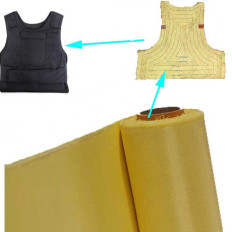
Products 430, 646, 952 and 1191 are fabrics or technical materials intended for further processing. They should not be confused with finished PPE. Product 1318 is a finished vest, currently associated with personal safety categories, and is not one of the four fabrics in this category. Any characteristics of the vest do not automatically apply to fabrics sold separately.
This category belongs to the industrial tapes and fabrics. For finished protective products, see PPE and personal safety.
Frequently asked questions
Which fabric is the lightest?
Among the products compared, 430 has a fabric weight of 240 g/m². Weight alone does not determine performance.
Are Kevlar, UHMWPE and HPPE equivalent?
No. They belong to different material families and should be compared together with construction, thickness and fabric weight.
Does cut-resistant mean puncture-resistant?
Not necessarily. Cutting and puncture are different stresses and require specific data.
Do EN 388 references always mean that the fabric is certified?
No. Any regulatory reference must be assessed together with the technical documentation for the specific article and its intended use. For safety applications, always check the product sheet or request information before use.
Is raw fabric PPE?
No. Raw technical fabric does not automatically constitute personal protective equipment.
Which formats are available?
The current formats range from 100 × 100 cm to 185 × 100 cm, with specific measurements for each product.
Is technical documentation available?
The available documentation may vary by article. Contact us before purchase if you need to check technical data, characteristics or requirements for your project.
How do I choose the right material?
Compare the stress involved, fabric weight, thickness, format and documentation required by the project.
To check technical data or project requirements, contact us.