Suitable for a wide range of sectors:
Private sector enclosures (music rehearsal rooms, hobby rooms, etc.)
Recording studios (Radio, etc.)
General noise reduction measures
Features:
Broadband sound absorption covering a wide range of frequencies (porous absorber)
| Color |
anthracite grey |
| Volumetric weight |
25 – 30 kg /m³ |
| Operating temperature |
-40° to +100°C |
| Thermal conductivity |
0.04 W/mK |
| Fire behaviour |
FMVSS 302, DIN 75200, DIN 4102 B3 |
| Sound absorption capacity |
***
|
| Cleaning |
** |
| Deformation/resistance |
*** |
| Fire protection |
** |
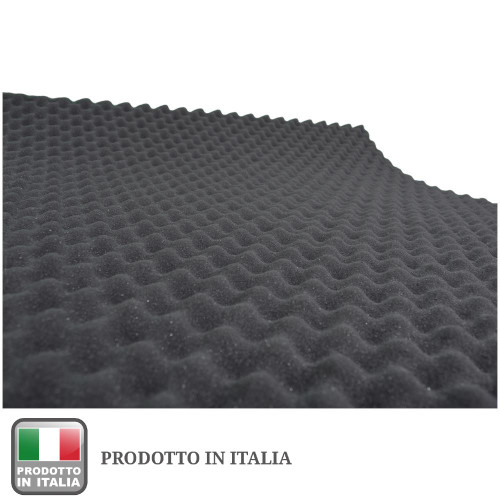
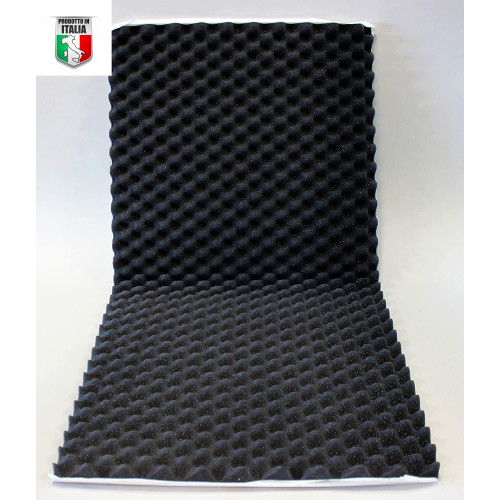
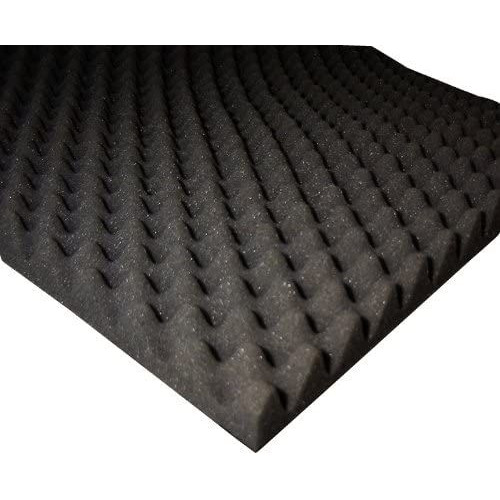
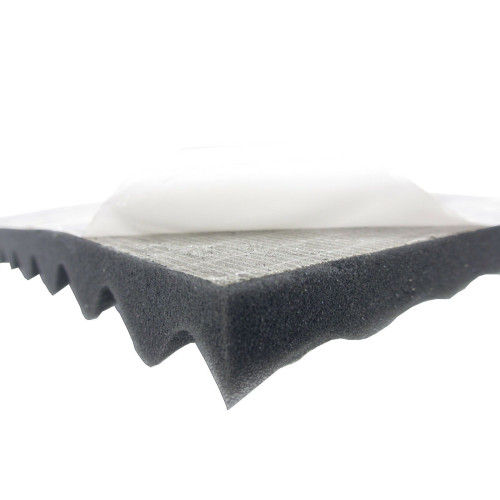
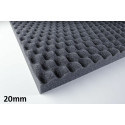
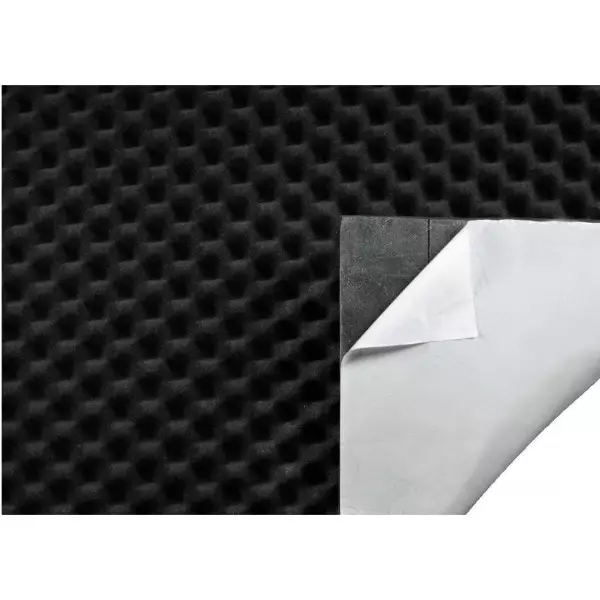
The Egg-crate sound-absorbing panel is a classic model used for basic correction of mid-high frequencies where high performance is not required. Suitable for classrooms, meeting rooms, etc. Size: Maximum care is taken in cutting each sound-absorbing product, but unfortunately expanded polyurethane is a very elastic product that can move slightly during cutting. For this reason, even with maximum precision, all products may have a cutting tolerance of +/- 2%. Fire reaction: Polyurethane products are not non-flammable but, like all organic-based plastics, they are combustible and burn when in contact with flame. In case of fire, polyurethane develops fumes and combustion gases whose composition varies depending on both the foam characteristics (formulation, density, etc.) and the fire conditions (ventilation, temperature, etc.). The most serious danger in case of fire is the development of carbon monoxide and the reduction of oxygen in the environment, as with all organic compounds. Tests show that the combustion gases from polyurethane foams generally do not differ from those of products such as wood or wool.